Welcome to TheVitaPaws — Expert Care for Your Furry Friends!
✦
Welcome to TheVitaPaws — Expert Care for Your Furry Friends!
✦

The Complete Rottweiler Breed Profile & Care Guide
Hello, TheVitaPaws pack! Ethan here from sunny Denver, Colorado. If you are looking for a loyal, intelligent, and deeply devoted companion, you will undoubtedly love our comprehensive Rottweiler breed profile. First and foremost, these magnificent dogs are often misunderstood by the general public. However, true dog lovers know that beneath their strong, muscular exterior beats a gentle and deeply loving heart. Over time, I have worked with countless “Rotties,” and they never fail to amaze me with their brilliant minds and eager-to-please attitudes. Therefore, whether you are planning to welcome a new puppy into your home or just want to learn more about this incredible working dog, this guide is specifically for you. Ultimately, we are going to explore everything from their fascinating history to their daily care needs, ensuring you have the exact expert knowledge to give your furry friend their absolute best life possible.
🐾 Key Takeaways
- Key Highlight: Profoundly loyal and fiercely protective, making them world-class family guardians when properly socialized.
- Activity Level: Requires 1.5 to 2 hours of daily exercise, including brisk walks and structured mental challenges.
- Care Tip: Brush their sleek double coat weekly to manage shedding and keep their underlying skin healthy.
Breed Overview
| Breed Characteristic | Official Details |
|---|---|
| Group | Working Group |
| Height | 24-27 inches (males), 22-25 inches (females) |
| Weight | 95-135 pounds (males), 80-100 pounds (females) |
| Lifespan | 9-10 years |
| Origin | Germany |
Rottweiler Characteristics
History of the Rottweiler
Ancient Roman Roots
To begin with, the story of the Rottweiler starts thousands of years ago alongside the mighty Roman Empire. Consequently, as the Roman legions marched across Europe, they desperately needed tough, durable dogs to herd their cattle and guard their remote camps. Therefore, these ancient mastiff-type dogs bred with local herding dogs in the town of Rottweil, Germany, laying the foundation for the breed we know today.
The Butchers’ Dogs of Rottweil
Over time, they became widely known as the “Rottweiler Metzgerhund,” or the Rottweil butchers’ dogs. Essentially, they were tasked with pulling heavy meat carts to market and protecting the day’s earnings in small leather pouches tied safely around their robust necks. Ultimately, this intense working history shaped their immense physical strength, raw intelligence, and unwavering loyalty to their masters.
Modern AKC Evolution
Eventually, as modern industrialization replaced cattle drives and dog-pulled carts, the breed almost completely disappeared from the world. Fortunately, dedicated breed enthusiasts stepped in to save them, successfully transitioning their natural skills into vital police and military work. Today, the American Kennel Club recognizes them as a premier working dog, consistently celebrated for both their bravery and deep, gentle affection for their human families.

Training and Care Needs
Daily Physical Exercise
First and foremost, Rottweilers are highly robust, active dogs that require plenty of daily physical movement to stay healthy. Consequently, you should plan for at least 90 minutes of vigorous exercise each day to keep them truly happy. Therefore, whether it is a long hike in the local mountains or a spirited game of fetch in a secure backyard, providing a safe outlet for their energy is non-negotiable.
Mental Stimulation is Crucial
In addition to physical activity, their highly intelligent brains constantly crave engaging mental workouts. Thus, incorporating fun puzzle toys, advanced obedience training, and rewarding scent work into their daily routine is an absolute must. Without a doubt, a bored Rottie can quickly become stressed and destructive, so keeping their active minds engaged is just as important as a long, tiring walk.
Coat Care and Grooming Loops
Surprisingly, grooming a Rottweiler is relatively simple compared to dealing with other large, fluffy breeds. Because they possess a short, dense double coat, a good brushing session once or twice a week is usually entirely sufficient. Moreover, during the heavy shedding seasons of spring and fall, using a quality shedding blade will rapidly help remove the dead undercoat, keeping your home much cleaner.
Common Health Problems
Naturally, like all large breed dogs, Rottweilers are sadly predisposed to certain genetic health conditions. Therefore, being highly aware of these specific risks helps you catch any warning symptoms early and consult your trusted veterinarian immediately.
- Hip and Elbow Dysplasia: A common, painful joint condition where the bones do not fit together perfectly, causing noticeable limping and severe arthritis over time.
- Gastric Dilatation-Volvulus (Bloat): A sudden, highly life-threatening stomach condition that traps gas and requires immediate, emergency veterinary surgery.
- Aortic Stenosis: A serious, inherited heart defect that dangerously restricts normal blood flow, often detected early as a heart murmur during routine checkups.
- Osteosarcoma: A highly aggressive type of bone cancer that unfortunately affects many large and giant dog breeds later in life.
Diet and Nutrition
Precise Feeding Metrics
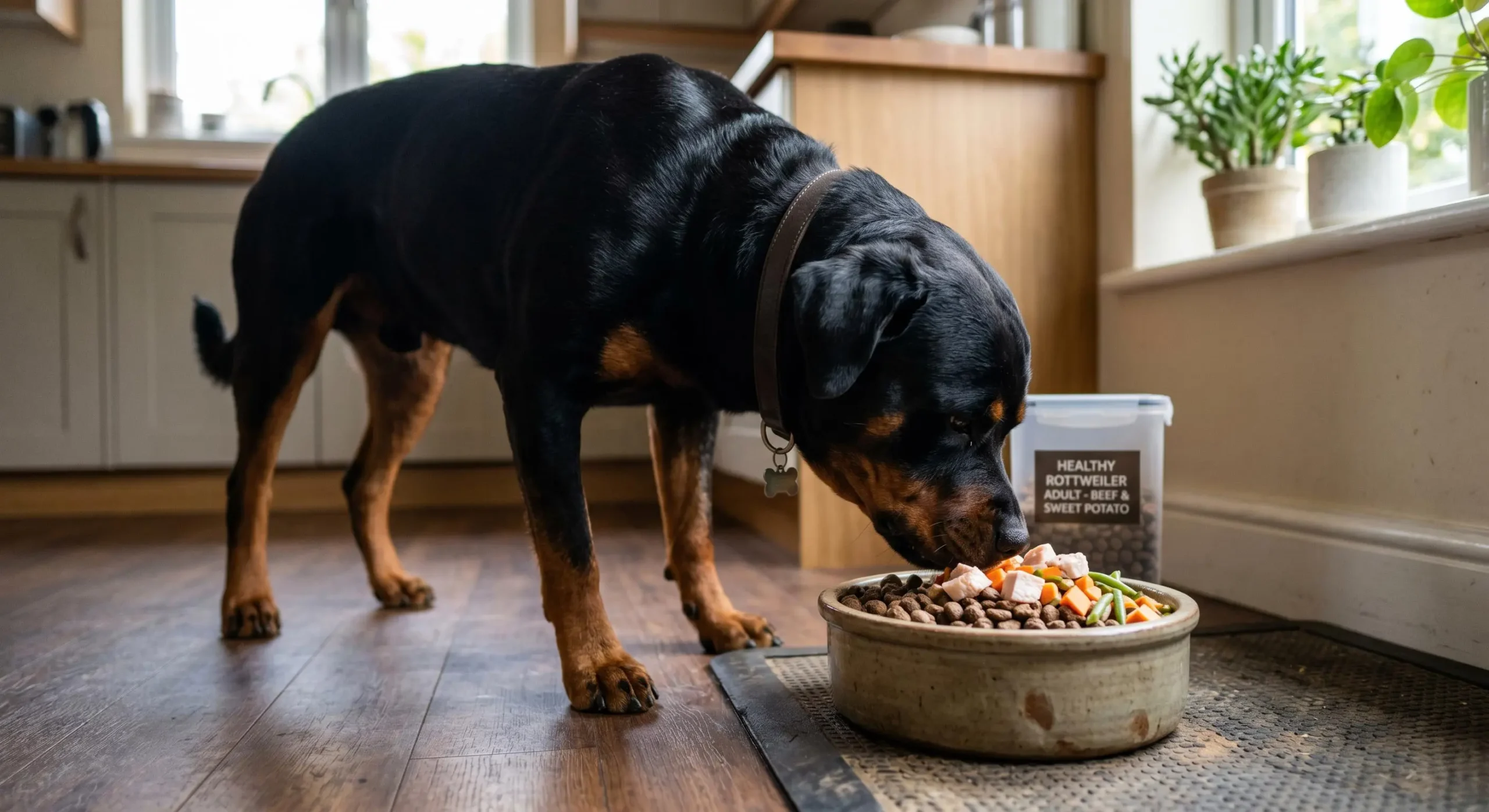
Above all, properly fueling your Rottweiler’s heavy, muscular body requires a premium, well-balanced diet. Generally, a healthy adult Rottie needs about four to six cups of high-quality dry food per day, which must be divided into two separate meals. Consequently, splitting their daily meals is highly recommended by veterinarians to greatly reduce the risk of dangerous stomach bloat.
Raw Ingredient Quality Standards
Furthermore, you should always look for commercial dog foods where real, whole meat—like chicken, beef, or lamb—is listed clearly as the very first ingredient. Because these dogs carry such heavy, powerful frames, adding joint-supporting dietary supplements like glucosamine and chondroitin is an excellent, proactive idea. Thus, providing top-tier, clean nutrition early on will effectively help support their aging bones and muscles for many years to come.
Weight Management and Safety Precautions
Finally, it is crucial to monitor their body weight closely, as these beautiful dogs love to eat and can easily become obese. Therefore, try to keep dog treats to a strict minimum, ensuring they make up absolutely no more than ten percent of their daily calorie intake. In conclusion, maintaining a lean, healthy body weight is the absolute best way to extend your beloved dog’s lifespan and protect their vital joints.
Frequently Asked Questions
Are Rottweilers good family dogs?
Yes, they form incredibly strong bonds with their families and are deeply affectionate when raised properly. Consequently, they require early socialization and firm, consistent training to thrive safely in a busy household.
Do they bark a lot?
Generally, Rottweilers are quiet dogs that only bark when they need to alert you to a stranger or a specific danger. Therefore, if your dog is barking excessively, it is usually a sign of boredom or separation anxiety rather than a breed trait.
Disclaimer: The information on TheVitaPaws is for educational purposes only and should not replace professional veterinary care.